
Carlos Alcaraz Redefines Luxury Under the US Open Grand Slam
By Javier Lasso Altamirano
As the late-summer heat gives way to New York's electric hum, the US Open once again transforms the hard courts into a global stage for athletic drama and contemporary style. While Grand Slam tennis has always carried athletic prestige, this season’s cultural narrative belongs entirely to Carlos Alcaraz. The Spanish phenomenon has emerged as the defining archetype of modern athletic luxury, transitioning effortlessly from blistering baseline rallies to the front rows of European couture. Under the stadium floodlights, peak performance and high fashion no longer sit in separate worlds—they have merged into a singular, kinetic statement.
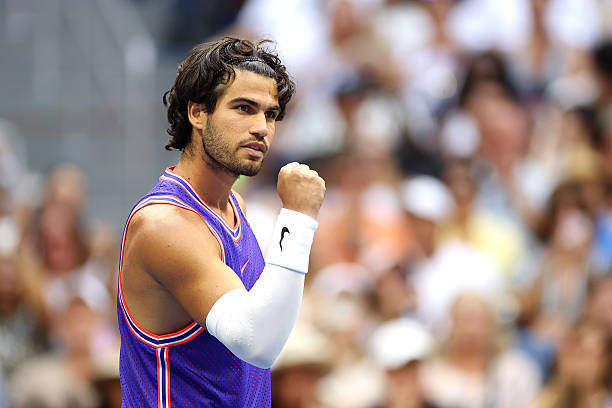

For Alcaraz, this edition carries a weight that transcends aesthetics. Arriving in New York as the defending champion after his commanding 2025 run, he steps into the city with both expectation and unfinished business. At just 23, he returns to the Grand Slam stage after more than 120 days away — a spring wrist injury that forced him out of Roland Garros and Wimbledon, testing his patience and sharpening his hunger. Walking back onto Arthur Ashe is not just a title defense; it is a reclamation. A declaration that absence did not weaken him — it refined him.
That sharpened edge is immediately challenged by the most unforgiving field in modern tennis. In an era defined by his high-voltage rivalry with Jannik Sinner — and a pack of contenders eager to exploit any trace of rust — Alcaraz has no room for hesitation. Under the blue glow of Arthur Ashe, there are no gentle reentries. He answers the moment with pure athletic theater: sliding recoveries that carve across the acrylic baseline, drop shots disguised with audacious calm, and an inside-out forehand that detonates off the court with familiar violence. It is a performance of tactical maturity, proof that four months away didn’t dull his instincts — they distilled his composure.

Yet Alcaraz does not arrive in New York alone. Behind the raw athletic machinery is an unprecedented cultural coalition, one that firmly positions him at the axis of modern luxury. From Parisian couture to Swiss horology, the world’s most venerable houses have rallied behind the young Spaniard, transforming his Grand Slam return into a runway of contemporary taste. As a global House Ambassador for Louis Vuitton under Pharrell Williams’ direction, Alcaraz has rewritten the visual code of athletic masculinity. Whether gracing the pages of Vogue in tailored silhouettes or stepping onto the Manhattan avenues with custom Damier luggage, he wears high fashion with the same unstudied ease he brings to center court—effortlessly trading archaic country-club tropes for relaxed Mediterranean elegance.
On his wrist, the understated gleam of a Rolex Cosmograph Daytona quietly reinforces a standard of classic horological pedigree, while bespoke Nike kits translate runway-level aesthetics directly into the arena. He is not merely an athlete collecting corporate endorsements; he is a curated cultural phenomenon. As the tournament converges with the opening days of New York Fashion Week, front-row editors and downtown designers trade runway presentations for baseline seats at Arthur Ashe, drawn to a champion who moves between silk tailoring and sweat-soaked wristbands without missing a beat. In Alcaraz, luxury has found its most kinetic canvas: powerful, authentic, and utterly unforced.


As the tournament deepens into the second week and tension thickens under the Queens night, one question lingers in the humid city air: will this be the championship that crowns Carlos Alcaraz once more, or has it already become the definitive coronation of his legacy? Win or lose on match point, the answer feels inevitable. At just 23, the Spaniard is no longer tennis’s brightest present — he has authored its cultural future. By fusing the gladiatorial violence of the hard court with the effortless poise of high fashion, he has elevated athletic dominance into an art form. The stadium floodlights demand spectacle, but they also demand truth. And under their relentless glare, Carlos Alcaraz proves that modern luxury doesn’t simply watch from the private suites — it steps onto the court, commands the baseline, and claims its era.


