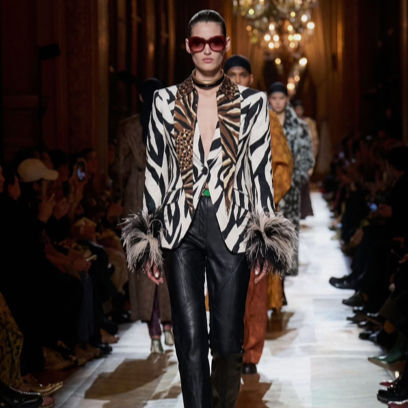
Schiaparelli Haute Couture The Agony and the Ecstasy
In the hushed drama of Paris Haute Couture Week, Daniel Roseberry unveiled Schiaparelli's Spring/Summer 2026 collection, boldly titled "The Agony and the Ecstasy". Inspired by a profound visit to the Sistine Chapel, where Michelangelo's ceiling frescoes shifted the designer's focus from meticulous control to raw emotional release, this collection marks a pivotal evolution for the house. Roseberry described the experience as moving beyond how garments appear to how they feel, a sensory invitation rather than a narrative explanation.
The runway became a theater of transformation, channeling nature's most formidable predators into couture's most audacious forms. Reptilian and arachnid motifs dominated: dramatic scorpion tails curved menacingly from the small of backs in the "Scorpion Sisters" pieces, venomous stingers and snake teeth emerged as sharp, 3D embellishments, and chimera like silhouettes fused menace with majesty. Avian elements soared alongside giant wings sprouting from jackets and dresses, multicolored feathered bustiers mimicking birds in flight, and resin bird head accessories with pearl eyes and silk feather crests (no real birds harmed, of course). One standout, the "Isabella Blowfish," reimagined the signature Elsa jacket in translucent crin and lace, erupting in organza spikes and crystal dust for a blowfish-inspired defense mechanism.
Roseberry balanced this ferocity with exquisite restraint. Sharp shouldered tailoring in black lace and neon tulle created sfumato like gradients, while gravity defying hips and explosive silhouettes evoked both agony's tension and ecstasy's liberation. Craftsmanship reached new heights: one crested bustier alone featured 25,000 silk-thread feathers, and intricate trompe-l'œil effects turned fabrics into living illusions of alligator tails, horns, and predatory flight.
This was Schiaparelli at its most expressive honoring Elsa's surrealist legacy while pushing boundaries further. The collection didn't just dress the body; it armored the spirit, blending beauty with brutality in a way that felt urgent and alive. As Roseberry noted, drawing from the poet David Whyte, anger can be the deepest form of self-care—a shield rather than a weapon. In "The Agony and the Ecstasy", that shield becomes breathtaking couture: prickly, poetic, and profoundly human.
For those who dare to wear it, these pieces promise not mere clothing, but an emotional encounter one where vulnerability meets unapologetic power, and the wearer emerges transformed.